

“This deal is getting worse all the time.”
– Lando Calrissian, Star Wars: The Empire Strikes Back
Buyer’s remorse is one of the most frustrating facts of life. When it comes to PLM selection, buyer’s remorse isn’t just inconvenient—it can have long-term effects on company operations.
Selecting an enterprise PLM system should be a deliberate, well-informed decision that supports your company’s goals, integrates seamlessly with current infrastructure, and adapts as your business grows.
Let’s explore how to make a PLM selection that advances your business forward, ensuring you avoid the galaxy of pitfalls that can accompany a misstep in this critical decision.

1. Identify Your Objective
Defining the objective of your PLM solution is the first and most important decision-making step. Think of it as a compass, guiding the entire selection process. A well-defined set of objectives ensures your investment aligns with long-term business goals. Moreover, defining measurable outcomes lets you track progress effectively.
According to Harvard Business School, “there should be a correlation between your company’s key performance indicators (KPIs)—quantifiable success measures—and your business strategy to justify why the goal should, and needs to, be achieved.”
Defining your objective can be as simple as opening up your performance reports. Take stock of your performance in the most important areas to help set the stage for your objective.
The most common reasons for adopting PLM:
- To Reduce Time-to-Market: Critical for gaining competitive advantage and increasing market share.
- Cut Development Cost: Crucial for maintaining profitability and efficient resource allocation.
- Improve Product Quality: Essential for customer satisfaction and brand reputation.
- Increase Innovation: It’s key to staying competitive and meeting evolving market demands.
- Enhance Collaboration: Enhances productivity and streamlines processes across departments.
As you set clear targets from the outset, you create a reference point against which every vendor and service partner you later engage with can be effectively measured. Remember, involving stakeholders from various departments in this objective-setting process is crucial for ensuring organization-wide buy-in and successful PLM implementation.
2. Involve Key Stakeholders
“Each implementation is like a fingerprint, unique to each organization, and should be designed in consultation with the stakeholders, the external facilitator, and prior experience on what has worked and not worked in past implementation rollouts.”
— David Parmenter
In the early days of PDM, CAD, and CAM software, vendors began breaking down silos with integrated functionality into a system that today we call PLM. Back then, and even in PLM’s early days, it was considered the domain of engineering departments. Not anymore. Modern PLM is far more comprehensive and integrated.
This broad integration makes it crucial to involve key stakeholders early in the process to ensure their needs are considered. This also helps minimize later resistance and fosters cross-functional alignment.
Who are the PLM Stakeholders?
While the answer varies from business to business, large-scale PLM projects should involve these core business areas in your initial conversations:
- Executive Branch
- IT
- Engineering
- Product Management
- Quality
- Operations
- Supply Chain and Procurement
- Manufacturing
- Sales and Marketing
- Customer Support
Stakeholder involvement will be dynamic. While all these groups should participate in the initial planning, their involvement can be scaled based on the phase of the project and specific needs. Engaging department heads early ensures cohesion across your organization, driving collaboration and mitigating potential friction.
Free PLM Solution Selection Checklist
Be sure to download our PLM Selection checklist to confidently navigate your business to the right PLM technology, partner, and solution.
3. Flexibility through Configuration
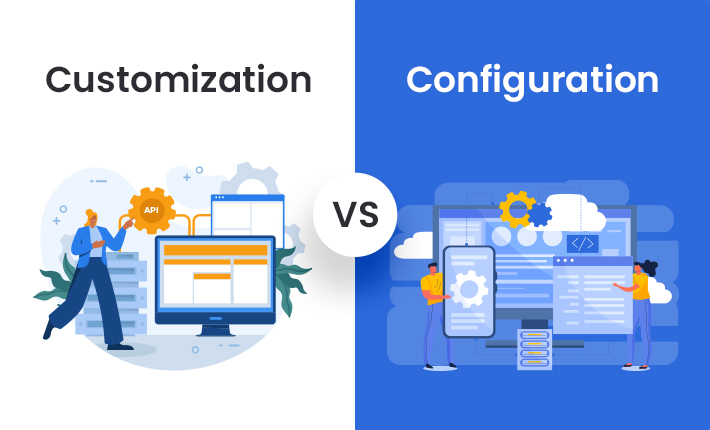
Now that you have set an objective and included each business area affected by PLM, it’s time to discuss vendors and technology. Customizing a PLM solution may seem appealing but it brings a slew of hidden costs and complexity, especially in on-premises PLM systems.
In contrast, cloud-based PLM software shifts the conversation from customization to configuration. This approach allows flexibility to tailor the system to your unique business requirements without incurring the technical debt of custom code.
Cloud PLM vendors automatically roll out updates and new features behind the scenes, eliminating the need for disruptive, costly upgrade projects. These systems evolve with your business, enabling quick adaptation to new processes or market demands. This flexibility is essential for staying competitive, reducing maintenance costs, and minimizing downtime.
Ultimately, choosing flexibility future proofs your PLM and further ensures your system remains scalable, agile, and easy to maintain.
4. Prioritize Total Cost of Ownership (TCO)
PLM is a long-term investment that can deliver value for years to come. With that in mind, low-cost entry points might be attractive, but, ultimately, should carry little weight in the selection process. A system that meets your organization’s needs today, as well as tomorrow, is the key to continued expansion. Total cost of ownership – the long view – will give you the bottom line, thus lowering costs.
TCO checkpoints:
- Scalability: Can it accommodate larger data volumes, and more complex processes over time without major disruptions or excessive technical debt?
- Upstream/downstream integration: A PLM solution that seamlessly connects to ERP, CRM, and other applications will streamline operations across departments and reduce integration costs.
- How are upgrades handled? Will the vendor provide support during upgrades, or will you be left managing disruptions alone?
- What are the hidden costs? Are future upgrades, support services, or feature enhancements included in the initial price, or will they incur additional fees?
Focusing on these factors will help you plan for long-term scalability and minimize operational disruptions, all while controlling costs over the life of your PLM system.

5. Plan for Scale
As your business evolves, your PLM system must keep stride. Whether you’re expanding or facing a downturn, your solution needs to adapt. A capable PLM system will help you avoid performance bottlenecks and ensure operational flexibility in the face of changing market and business conditions.
PLM Technology checkpoints:
- Can it accommodate new users, processes, and data volumes without significant disruptions, lag, or technical debt?
- Does it integrate with other applications and tools your organization has?
PLM Vendor checkpoints:
- Will they provide support during these transitions?
- Is there an additional cost associated with future upgrades?
These are essential factors to keep in mind when planning for the long-term scalability of your PLM system.
6. Analyze Integration Capabilities
For a PLM system to deliver its greatest value, it needs to be integrated with your existing tech stack (e.g., ERP, CAD, and CRM). Poor and patchy integrations and once or twice daily single direction exports are just messy. A long time ago, they could help in pinch, but even then, you end up with data silos, manual work, and inefficiencies.
Seamless integration checkpoints:
- Compatibility: Evaluate the PLM solution’s compatibility with core systems like CRM, ERP, and CAD. Make sure it supports industry-standard data formats and has APIs/ connectors to enable smooth data sharing.
- Bi-Directional Data Flow: Help to guarantee data can flow freely between systems (e.g., CAD changes should be reflected in the PLM system automatically, and BOM data in PLM should sync with ERP to support production).
- Integration Points: Identify critical points where systems need to connect. For example:
- ERP: Do product costs and schedules for accurate manufacturing sync?
- CAD: Do design files and revisions flow to PLM for collaboration?
- CRM: Does customer data for after-sales support sync?
- Middleware: If native integrations are limited, you may need to consider middleware solutions to facilitate data exchange without custom coding.
- Plan Data Migration: Make sure clean, accurate data is migrated from legacy systems to the PLM, addressing data quality and eliminating duplicates.
- Costs and Complexity: Understand the cost and complexity of integrating systems. Factor this into your budget to avoid hidden expenses.
- Testing: Conduct thorough testing to verify data flows as expected, with real-time syncing, preventing delays and errors.
- Centralized Data: A well-integrated PLM system creates a “single source of truth” for product data, enabling collaboration.
- Post-Integration: Continuously monitor system performance after integration to address issues before they impact operations.
Seamless integration isn’t just a technical requirement—it’s the way you maximize your investment. Poor integration leads to fragmented data, inefficiencies, and ongoing manual work, which ultimately undermines your product lifecycle management goals. By prioritizing compatibility and data centralization, you’ll have a healthy single source of truth entirely free of duct tape and twine!
 7. Vet PLM Service Partners
 7. Vet PLM Service Partners
The final part of the PLM Solution selection process is finding the right PLM professional services partner. This is an essential player – knowledgeable in the services and application of the platform you are evaluating. They will guide you through configuration, integration, and ongoing support. A good professional services partner will ensure a smooth implementation and maximized return on your PLM investment.
PLM Service Partner checkpoints:
- Industry Experience: Do they have a deep understanding of your specific challenges, regulatory requirements, and operational complexities. Do they have experience in your sector.?
- Proven Track Record: Request past client contact information. Get case studies and references from similar companies to assess their success in complex deployments. Look for evidence of timely project delivery and effective system integration.
- Strategic Guidance: A strong partner should offer insights into leveraging your PLM system for greater efficiency and innovation. Evaluate their best practices in project management, data migration, and user training.
- Post-Go-Live Support: (We’ll discuss further in a moment) Ensure ongoing assistance is available to resolve issues, manage updates, and facilitate continuous improvements. Continuous support is essential for maximizing ROI and minimizing risks.
- Customer Testimonials: Ask them to provide you with past client contact info. Get feedback from past or current clients. Obtain quantitative data demonstrating measurable improvements in KPIs, like reduced lead times, enhanced product lifecycle visibility, etc.
- Industry Benchmarking: Ask about benchmarking data to compare potential ROI with industry standards, providing insight into the long-term impact of PLM implementation.
By focusing on these aspects and gathering comprehensive evidence of a provider’s capabilities, you can select a PLM services partner that meets your immediate and long-term strategic goals.
8. Post-Go-Live Support
Ongoing support is critical for maintaining long-term system performance and maximizing your PLM investment. Post-go-live support ensures your solution keeps delivering value, even as your business evolves.
Support partner checkpoints:
- Support Tiers: Evaluate the range of available post-go-live support, from basic troubleshooting to advanced services such as proactive monitoring and system optimization. Opt for flexible packages that match your needs.
- Service Level Agreements (SLAs): Review the SLA to understand guaranteed response times, resolution windows, and escalation processes. For global operations, ensure 24/7 support is available.
- Health Checks: Check if the vendor offers regular system health assessments to proactively address issues before they impact operations.
- Post-Go-Live Training: Ensure the vendor provides ongoing training resources like webinars, sessions, or updated documentation to keep your team up-to-date.
- Change Management Support: Confirm the service partner offers consulting to help adapt the system to evolving business processes or regulatory changes.
- Customer Success Manager: Look for vendors that assign a dedicated CSM to provide ongoing communication, making sure your long-term needs are met.
Being in a position to meet today’s needs is important, but remember, we are also future-proofing your investment. Ongoing support through a competent partner will help you realize long-term growth, efficiency, and adaptability
Conclusion: Invest Wisely, Avoid Regret
When it comes to PLM selection, the risk of buyer’s remorse can be significant, consuming both time and resources. That’s why a thoughtful approach to planning is essential from the outset.
Starting with clear business objectives and stakeholder alignment will set the foundation for a successful PLM implementation. Focus on flexibility, total cost of ownership, scalability, and seamless integration when evaluating potential solutions. Additionally, choosing the right service provider can make all the difference in realizing the long-term value of your system. Make the right investment the first time and drive sustainable growth without looking back.
A Guide Through PLM Selection
If you’re looking for additional guidance in your selection process, consider partnering with experts who can simplify the steps, streamline the evaluation, and ensure you find a solution that fits your business needs.
Click here to learn more about how to explore your best PLM options with Domain Systems.
How about you?
As you reflect on your PLM journey, which part of the selection process has proven most advantageous for your organization?