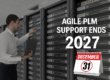

The consideration phase for digital transformation is well behind us. The technological landscape is undergoing a significant change, and users of legacy systems, like Agile PLM, are on the brink. This is the time to be evaluating cloud PLM.
Oracle’s announcement of Agile PLM’s end-of-life requires a swift reassessment of legacy systems for cloud-based alternatives. This transition isn’t just about software upgrades. It’s about embracing a future where agility, integration, and innovation intersect to make product data more valuable. Doing so ensures it’s accurate and easily available to everybody who needs it.
For Agile PLM users, the clock is ticking. With Oracle ceasing updates and support for Agile PLM, businesses are at a crossroads. Operating with outdated technology poses serious risks, including security vulnerabilities, compatibility issues, and innovation hurdles.
Additionally, the cloud is not just an alternative, but a mandate for IT leaders looking to make their teams more agile and efficient.
The Advantages of Cloud PLM
The transition to cloud PLM is more than a technological upgrade; it’s a strategic move towards sustainable growth. Additionally, the cloud offers unparalleled flexibility and efficiency, enabling businesses to adapt swiftly to market changes and consumer demands.
The cloud’s benefits – cost savings, better data analytics, and enhanced collaboration – highlight its importance in today’s digital economy.
Moreover, you will never experience another end of life if you move to the cloud, because developers continuously update their solutions. Ideally, cloud PLM providers will update their solutions multiple times per year, launching valuable updates that are immediately available to existing customers.
Propel into the Future
Enterprises seeking a seamless migration from Agile PLM to the cloud should look towards solutions like Propel PLM, which offers a familiar yet enhanced user experience.
Moreover, Propel stands out by providing a platform that integrates quality management (QMS) and product information management (PIM) on a single, integrated platform that easily connects to ERP and CRM, making it intuitive for Agile users. Additionally, Propel enables real-time collaboration between product and commercial teams, as well as releasing continuous updates within a proven cloud environment.
That said, let’s dive into some of the specific features for users who make the move to Propel:
- Continuous Updates and Innovation: Propel enables businesses to stay cutting-edge in PLM technology by continuously updating to meet market demands. A hugely important advantage when held up against Agile’s lack of future upgrades.
- Real-Time Collaboration and Accessibility: Propel enables global teams to collaborate in real time, thus breaking down silos and accelerating innovation. Unlike Agile, which is often restricted by its on-premise limitations, Propel’s cloud infrastructure ensures access anytime, anywhere, thus fostering a more connected and flexible work environment.
- Enhanced Integration Capabilities: Propel’s cloud architecture is designed for seamless integration with other cloud services and tools. This offers users a wider ecosystem for digital transformation with standard, proven connectors. Agile, on the other hand, might involve significant custom integration efforts, leading to higher complexity and costs.
- Superior Data Security and Compliance: Cloud solutions like Propel are built with state-of-the-art security features, offering robust data protection, compliance, and disaster recovery capabilities. This represents a significant leap over Agile’s on-premise systems, as security heavily relies on the organization’s internal IT infrastructure and practices.
Navigating the Transition
The journey from Agile PLM to a cloud-based system is a strategic endeavor that requires careful planning and execution. Businesses must consider data migration, user training, and process re-engineering, thus ensuring a smooth transition. Partnering with the right cloud PLM provider—one that offers comprehensive support and migration services—is crucial for success.
“We needed to upgrade our PLM from a very outdated Agile System. Propel provided this solution. Took us under their wing and paved the way for this to happen,” said QA Manager Chris Connor from the leading audio systems brand Meyer Sound.
To this point, Propel offers extensive support with proven success for companies transitioning off Agile, including a dedicated team and a clear migration plan.
From their experience with several Agile migrations, the Propel team has developed two main strategies for migration:
- Lift & Shift migration method, which delivers a complete, immediate switch.
- Side-by-side transition, which allows for real-time data transfer while maintaining the existing Agile system.
These strategies aim to create a seamless shift and minimize operational disruptions. Furthermore, they promote rapid user adoption so they can realize the tangible benefits of the cloud solution as quickly as possible. Indeed, after moving to Propel, Meyer Sound saw a 50% reduction in document control overhead.
Conclusion: Embracing Change and Innovation
So, as the clock ticks down, Agile PLM users have a critical decision to make. The shift to cloud PLM is not just an IT upgrade. It’s a strategic investment in the future of business innovation.
Adopting cloud technologies like Propel Software enables companies to achieve a continuous product thread while fostering collaboration from concept to customer. This drives competitive advantage in an increasingly digital world. The time to evaluate and act is now—future-proofing your PLM strategy is imperative for sustained success and growth.
Click here to explore the solution.

About Propel Software
Propel Software transforms the way product companies work. By connecting product and commercial teams with Propel, businesses drive process efficiencies to speed time to market, improve product quality, and increase profit margins.
Propel’s partnership with Domain Systems ensures smooth deployments across new product development, engineering, and quality areas. It offers access to Domain’s cross-functional business process consultants and PLM experts.